


GMC
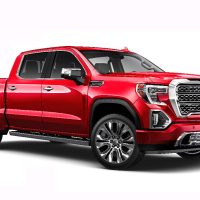 GMC is a division of General Motors that has been around about as long as the automotive juggernaut behind it and the automobile industry itself. A maker of various pickup trucks, SUVs and vans, GMC has long held a niche in the light-duty truck market. Sales have been on the rise lately, and the automaker is poised to have a record year, but that doesn’t mean it doesn’t produce vehicles with troubling issues. Many models have been recalled for various defects in recent years, and owners and lessees of GMCs frequently complain about problems with their transmissions.
Below, we look at the history of GMC and where it stands today, including recent safety and use issues. If you own or lease a GMC with problems that are covered by warranty but aren’t being fixed in a reasonable time or after a reasonable number of attempts, call Nick Nita at Nita Lemon Law Firm in Los Angeles to speak with an experienced and successful California lemon law attorney.
GMC History
GMC got its start in 1911 as the General Motors Truck Company and quickly became a division of General Motors (GM). Despite the similarity in names, the GMC name harkens back to the truck maker’s roots as the Grabowsky Motor Company, established in 1900 and later acquired by the General Motors Company in 1909.
A maker of pickup trucks, light-duty trucks, SUVs, and vans, GMC has lately been positioned as a more premium brand compared to similar Chevy vehicles manufactured by GM. GMC was previously marketed more toward businesses and commercial vehicle purposes rather than private ownership like Chevrolet but has since been appealing to the consumer market.
Although GMC has produced over 80 models in its century-plus of production, including medium-duty and heavy-duty trucks, buses, vans, sport utility vehicles, sedans, and even motorhomes and military vehicles, U.S. production today is currently limited to:
- Sierra, Canyon, and Hummer EV SUT light-duty trucks
- Savana van
- Acadia crossover SUV
- Hummer EV SUV
- Terrain, Yukon, and Yukon XL SUV
GMC sold 614,000 units in the U.S. in 2024, representing an 8.9 percent increase over 2023. Sales in 2025 are projected to exceed 2024, with the Hummer EV, Sierra and Yukon driving sales. According to GM, 2025 may be GMC’s best year ever.
Safety Defects and Recalls
In the last ten years, GMC has implemented over a dozen recalls for safety-related issues, with the lion’s share issued in the last five years.
Like every other major manufacturer, GMC vehicles were subject to the massive Takata airbag recall. As you may recall, faulty inflators were prone to explode and break apart upon deployment, sending metal shrapnel into the passenger cabin. Various Sierra models from 2007 through 2014 were the GMC vehicles most heavily impacted by the Takata recall.
But the Takata issue wasn’t the only airbag-related recall to hit GMC. The company issued a recall in 2016, this time for airbags potentially not deploying when they should due to a software issue. At least one death and three injuries were linked to this defect. The recall impacted many GMC models, including 2015-17 Sierra 2500 HD and 3500 HD pickups, Yukon SUVs and Yukon XL SUVs, and 2014-17 Sierra 1500 pickups. A similar airbag software issue later led to the recall of over 88,000 2018 Terrain crossover SUVs. Another crossover SUV, the Acadia, saw a recall of 2008-13 models for problems with the side airbag wiring harnesses and seat belt pretensioners that could cause airbag and seat belt failures.
Finally and most recently, GMC called back over 1,000 model year 2024-2026 Canyon AT4X AEV vehicles for a software error that could cause second-stage passenger air bag deployment when only a first stage is intended. A stage 2 deployment is of much higher intensity and is intended only for severe crashes. Vehicles with this defect fail to conform to Federal Motor Vehicle Safety Standard FMVSS 208 Occupant Crash Protection.
Airbags aside, other recent recalls cover other vehicle aspects, from headlamps to the engine itself. Over 740,000 Terrain SUVs covering model years 2010-2017 were recalled for overly bright low-beam headlights. More recently, over 13,000 2024 Canyon pickups were called back for a flickering headlight issue. Both issues affect safety; an overly bright low-beam could blind an oncoming driver and raise the risk of a crash, while headlight flicker reduces visibility for the driver of the defective vehicle. Those vehicles fail to comply with FMVSS 108, “Lamps, Reflective Devices, and Associated Equipment.”
Other recent recalls include:
- All GMC 2021-2024 models equipped with the 6.2L V8 engine were recalled due to the risk of loss of power from catastrophic engine failure, stemming from manufacturing defects in the connecting rod and/or crankshaft engine components.
- Over 70,000 2022 Sierra 1500s were recalled due to the risk of chrome grille deflectors detaching from the vehicle and becoming a road hazard when the attachments break.
- 2020-2024 Sierra HD 2500, 3500 models with power-unlatching tailgates were recalled when it was found that water intrusion could cause a short circuit and inadvertent unlatching while in park, with the risk that unsecured cargo could spill out of the bed.
- Software errors in the transmission control module of 2022-2023 Savana vans could cause rear wheel lock-up and other errors that could move the vehicle in an unintended direction, raising the risk of a crash. A similar defect led to the recall of certain 2020-2022 Sierra, Yukon, and Yukon XL vehicles.
- GMC issued a recall for 2023 Sierra 1500, Yukon, and Yukon XL models due to a software issue in the electronic brake control module. The EBCM could fail to display a low brake fluid warning light in violation of FMVSS 135 Light Vehicle Brake Systems, leading to reduced braking performance.
- A defect in the 2023 Canyon front camera module could cause it to falsely detect an obstacle, making the automatic emergency braking engage unexpectedly, which could increase the risk of a crash.
When Is a Defective Vehicle a Lemon in California?
Under California lemon law, a lemon is a new or leased vehicle under the manufacturer’s original warranty with a defect that substantially impairs the vehicle’s use, value or safety, and that cannot be fixed after a reasonable number of repair attempts. The law presumes a vehicle to be a lemon after two attempts to repair a serious safety defect, four attempts to repair another type of problem, or after being out of service for repairs for more than 30 days. Those 30 days are cumulative but not necessarily consecutive.
If you find yourself stuck with a lemon in California, the lemon law gives you options:
- Return the car to the dealer for a refund
- Return the car to the dealer for a replacement
- Keep the car and receive compensation for the loss in value and other legal damages you have incurred
There are many procedural hurdles to overcome to pursue a lemon law claim successfully. California instituted several new procedures last year, but since the changes were controversial, the law was amended to allow manufacturers to opt in to the new procedures or stick with the previous procedure for resolving lemon law claims. GM, and hence GMC, is one of the manufacturers that opted in to the new procedures. If you have an issue with your GMC, it is important to contact an experienced lemon law attorney who is familiar with the new procedures in California law to make sure your claim is pursued correctly.
Contact Nita Lemon Law Firm With Your California Lemon Law Claim
If you think your GMC qualifies as a lemon and you want to explore your remedies, contact Nita Lemon Law Firm. Based in Los Angeles, we handle lemon law claims throughout the state of California and can help you get the remedy you desire. Call today for a free consultation with California lemon law attorney Nick Nita.